

The Rise of Digital Trauma
How engagement with social media is affecting our mental health.
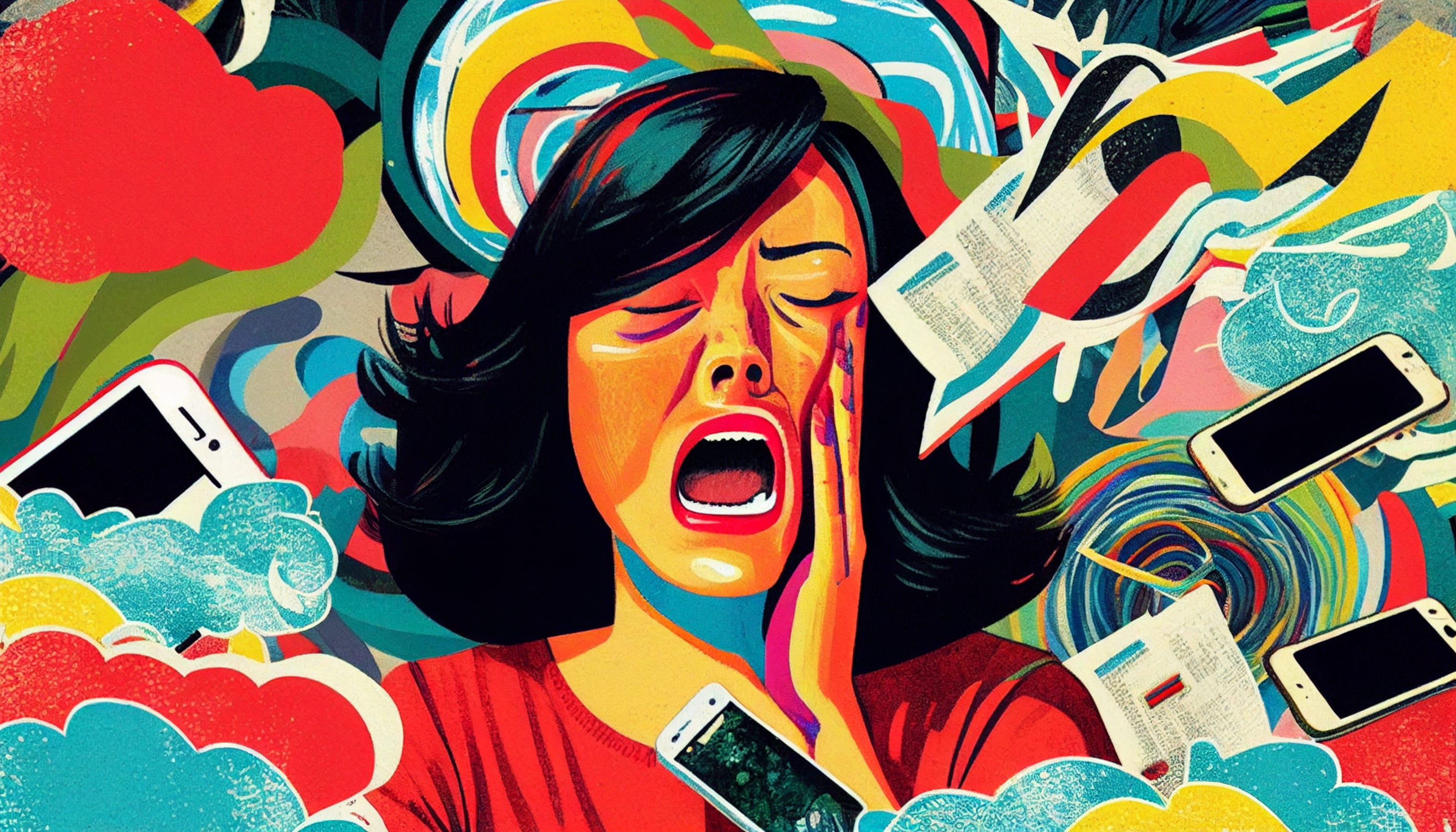
There is a disturbing crisis of mental health that has emerged in recent years that has left an alarming number of people feeling depressed, anxious, suicidal, hopeless, and a sense that nothing can be trusted anymore. Many studies have shown a strong correlation between the use of electronics and mental health, and stories are coming out every day about an AI bot encouraging a kid to commit suicide, someone experiencing harassment or bullying online, or how a violent criminal was radicalized by something they saw on the internet. The number of young people who are disengaged from relationships and their communities is at an all-time high. Many psychologists, including myself, see social media and the heavy use of electronics to be the primary culprit.
Excessive engagement with digital devices has created a new form of traumatic effect on the brain that I call “digital trauma.” Digital trauma is simply a term to describe a constellation of mental health and neurological changes that result from engaging in the modern digital world. These include a heightened sense of anxiety, compulsive and extreme behavior, difficulty differentiating what is real and what is not, emotional sensitivity and dysregulation, empathy fatigue, unhealthy self-orientation, a disruption in developmentally-appropriate relationships, and changes in the ability to recognize and respond to social cues. Let’s take a quick look at the term trauma and what that means.
What is Trauma?
When most of us hear the word trauma, what comes to mind is some kind of severe event that leaves an emotional scar on our soul. We think about soldiers exposed to combat, someone experiencing an assault, witnessing a violent crime, or police having to deal with tragic and dangerous situations, and how those events can lead to mental and emotional changes. We think about the extreme situations that people survived and have some empathy about how those experiences could have a major impact on their mental health.
There is also a more insidious form of trauma that emerges from a continuous pattern of subtle toxic experience that can lead to similar mental and emotional changes seen in more severe events. This form of trauma is delivered through the relationships we have with other people and our environment. It is the collective pattern of messages that we get from those around us that we are alone, unlovable, unsafe, helpless, and meaningless. Kids who grow up in dysfunctional families will often be immersed in harmful messages like this for years. The result is that many of them will enter into adulthood with a distorted sense of self. They will often feel a sense of being broken and unworthy of being loved. They will struggle with feelings of isolation, anxiety, depression, and figuring out who they are. This is because our sense of self comes from our relationships with others and when those relationships are unhealthy, our mental health will suffer.
The Dysfunctional Digital World
It is important to understand that the digital world is not an accurate reflection of the real world. In fact, it is a carefully manipulated stream of evocative content intended to be addictive and shape the way we see ourselves and the world around us. Highly-attuned algorithms feed us curated content to provoke feelings of fear and outrage and then pair it with funny cat videos, inspiration, and sex in order to hijack the emotional centers in our brain. To make matters worse, much of the online comments and content is not even produced by real human beings. It is a battle ground for foreign bot farms to undermine your sense of what’s real and the pain the world as a hostile and chaotic place.
Don’t get me wrong, there are many benefits to the digital world. For example, if I needed to sell a couch, Facebook Marketplace is the perfect venue for that. What if I wanted to find a partner? Rather than hanging out in bars, I could jump on a website like Match.com and be introduced to a large number of potential partners who share my interests and values. If I wanted to do some online research on a topic of interest, or to decide which car to buy, the digital world is a great place to do that because of its massive reach and endless content. So, the issue is not that everything digital is bad. The issue is that there is a harmful side to spending too much time online and the consequences of this are becoming more obvious every year.
Avoiding Digital Trauma
There are three main things to keep in mind in order to avoid the negative effects of the digital world while still enjoying the benefits of what the online world has to offer. The first is to use the internet to make connections and then take those connections offline. Minimize the amount of time spent in chat rooms and social media feeds. Get out into the real world and make organic human connections with people.
The second is to view everything that you see in a newsfeed with a high degree of skepticism. Chances are that what you are reading is factually untrue. Clips from what people say are often taken out of context or edited in a way to make them appear to say something opposite of what they actually intended. Many stories have evocative headlines that prove to be completely fabricated, and when there is an element of truth to the story, the spin misrepresents what is happening in reality.
The third is to set aside a short period of time that you will devote to your online presence and that’s it. Do not look at your phone all day long. Put it away and engage in the world around you. Be present with your life. Allow yourself to be bored sometimes. It’s good for your brain to have time to just be present.
The bottom line is that the digital world is creating a new form of mental trauma and it is impacting the lives of a lot of people. While some people can just avoid electronics altogether, most of us have a part of our lives entwined with the digital world. So, the key to protecting ourselves from the harm while enjoying the benefits, is to be very intentional in our engagement with electronics.